


On Saturday 20 September, the CC-IN2P3 will open its doors to the public for the Journées Européennes du Patrimoine.
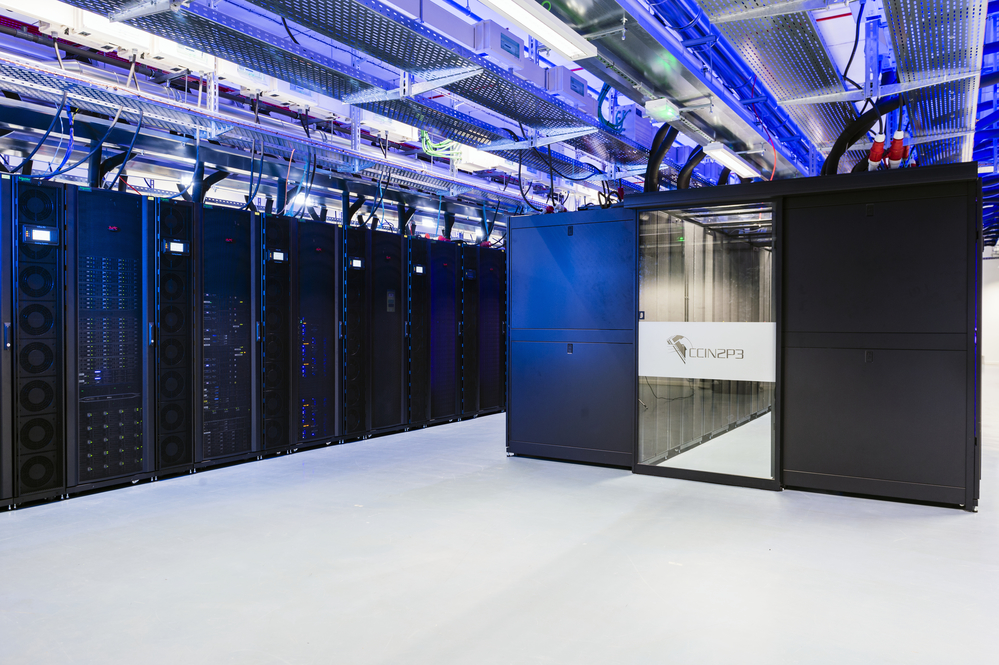
During this day, discover computing as you’ve never seen it before! Book your guided tour of the CC-IN2P3, where thousands of interconnected servers are used by the largest high-energy physics experiments.
You can also visit the CC-IN2P3 computer museum, one of the few initiatives of its kind in France. A video testimony by Daniel Charnay, a pioneer of the web in France, will tell you how the centre hosted the first French web server. You can also attend conferences on the history of computing, explore the Discovery area where fun and interactive workshops await you, and browse an exhibition tracing the evolution of computing resources in line with the needs of major physics experiments. Details of the activities on offer can be found below.
Can’t make it? No problem, you can also join us live on Saturday on Twitch.
Visit the CC-IN2P3!
A national research infrastructure, the CC-IN2P3 is a CNRS computer processing centre that manages the computer data from the largest scientific experiments in high-energy physics. The CC-IN2P3 has two computer rooms housing several thousand servers and automated libraries capable of storing nearly 340 petabytes of data on magnetic tapes.
Come and discover this gem of the CNRS’s computing heritage, normally closed to the public, during a 45-minute guided tour (booking required).
Please note: these tours take place in an environment that can be noisy and subject to temperature variations.
Computer Museum
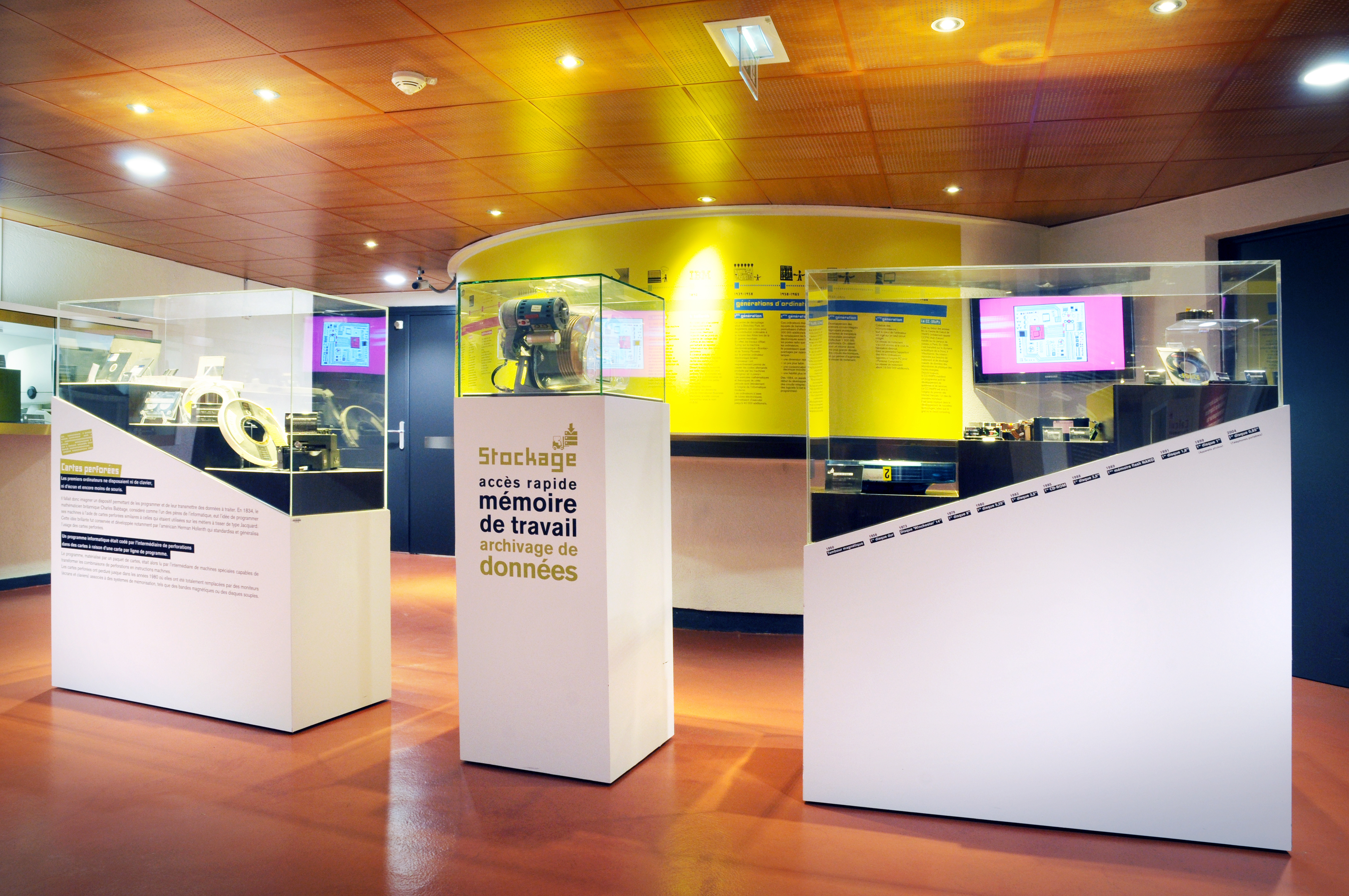
The permanent exhibition at the CC-IN2P3 Computer Museum invites visitors to discover the evolution of computer technology dedicated to science, from the first calculating machines to cloud computing. Visitors learn how the needs of physicists stimulated the emergence of technologies that are widely used today. Explanatory panels and interactive displays trace the challenges faced by the CNRS during the pioneering period of microcomputing.
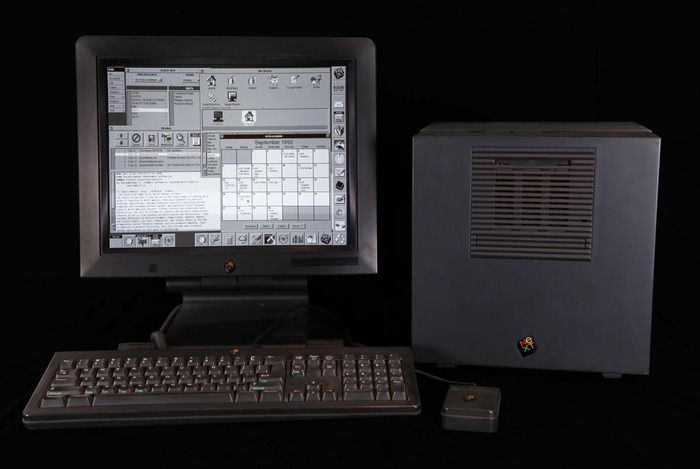
Among the iconic pieces, the NeXTcube station, which in 1992 hosted France’s first web server linked to CERN in Villeurbanne, occupies a central place. The collection also preserves rare equipment, such as the CHADAC, a microcomputer developed for nuclear physics, which has been carefully restored and preserved.
Lyon, birthplace of the French web
Did you know? In 1992, the first French web server was launched in Villeurbanne, at the IN2P3 (CNRS) Computing Centre, near Lyon. At that time, the web, which had just been invented at CERN in Geneva, was still reserved for confidential use by physicists to exchange data.
Discover the history of this revolution: why and how the web was born, how it differs from the Internet, and what the very first French website looked like. You will also learn about the history of its pioneers in France, Daniel Charnay and Wojciech Wojcik, and admire the NeXTcube station that hosted this historic server.
Conferences
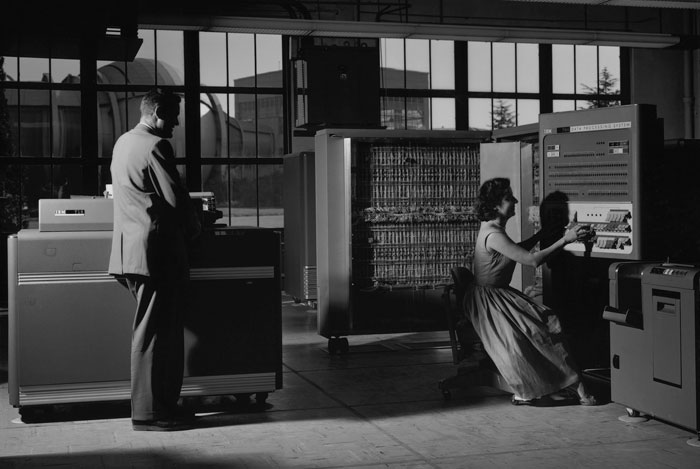
The CC-IN2P3 is collaborating with various partners to offer several conferences on computing and its history throughout the day.
- At 11 a.m., Jérome Bernier, a computer engineer, will give a lecture entitled “History of Computer Networks” in the computing centre’s amphitheatre.
- At 2 p.m., Christophe Ponsard, researcher and lecturer in computer science at the NAM-IP Computer Museum (Belgium), will give a lecture entitled “History of AI” in the amphitheatre.
- At 4 p.m., Jérome Bernier, computer engineer, will give a lecture entitled “History of Computer Networks” in the amphitheatre of the computing centre.
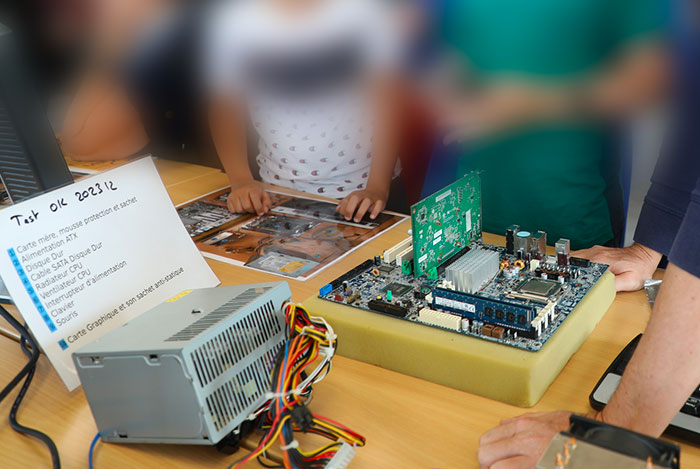
Computer Science Discovery Area
How does a computer work? What did the first calculating machines look like? What are Moore’s Law and the binary system? How do you create an algorithm? And how was the very first video game programmed?
During these open days, the Computing Centre invites you to rediscover computing from a new angle through a series of fun and interactive workshops, in partnership with Ambroise Thielley from the ENIAC association, Terra Numerica and MMI Lyon (mmi-lyon.fr).
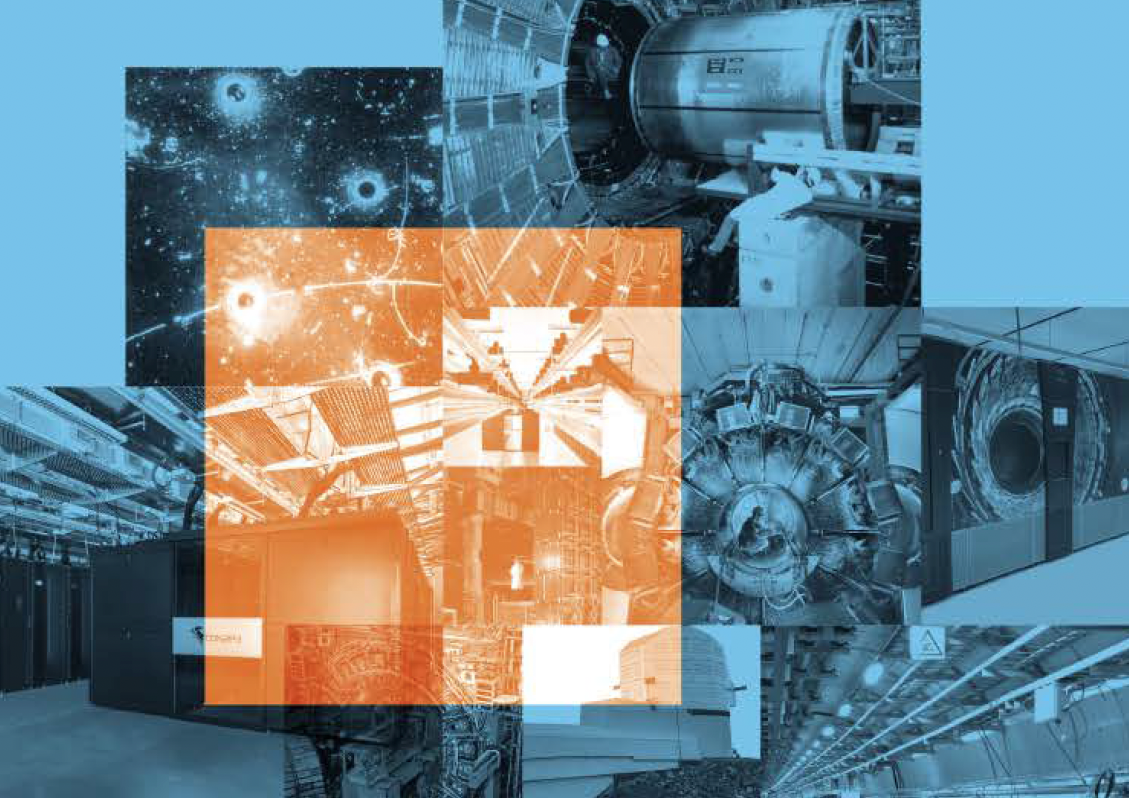
Exhibition: ‘From Calculation to Data: Computing, a Fundamental Component of the Scientific Process’
Created in the 1970s, the CC-IN2P3 is France’s data processing hub for major physics experiments. It has supported CERN‘s experiments since 1980 with the SPS accelerator, then from 1990 with the Large Electron-Positron Collider (LEP), and since 2005 with the Large Hadron Collider (LHC), the world’s largest particle accelerator.
Its expertise also extends to numerous international experiments, from BaBar in Stanford (United States) on antimatter, to VIRGO in Pisa (Italy) on gravitational waves, and the TEVATRON experiments in Batavia (United States). More recently, the Centre has continued to participate in cutting-edge projects such as the Euclid space telescope and the Vera Rubin Observatory in Chile.
Through a dozen panels, the exhibition recounts how the Computing Centre has developed its IT infrastructure to meet the needs of these experiments and has thus contributed to several major scientific discoveries.