

Collective crystal of the CNRS
3 November 2022
International Day of Women and Girls in Science 2024
7 February 2024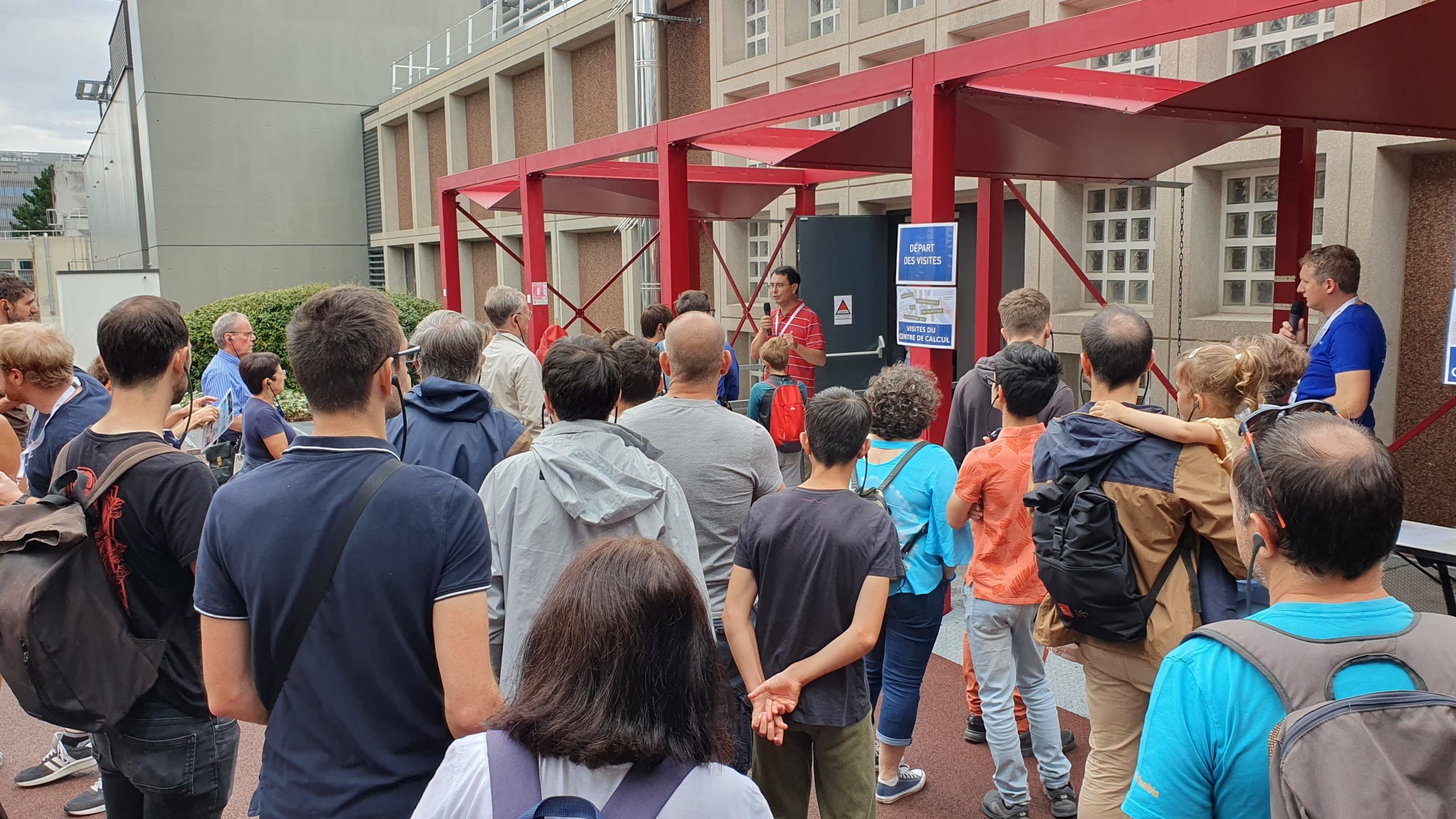
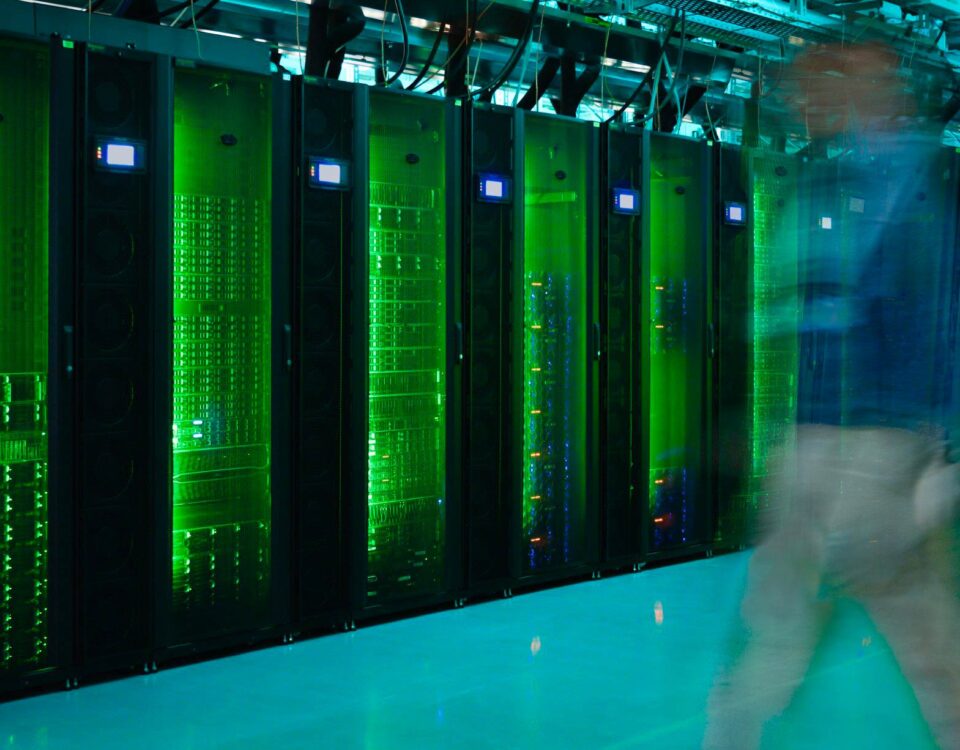
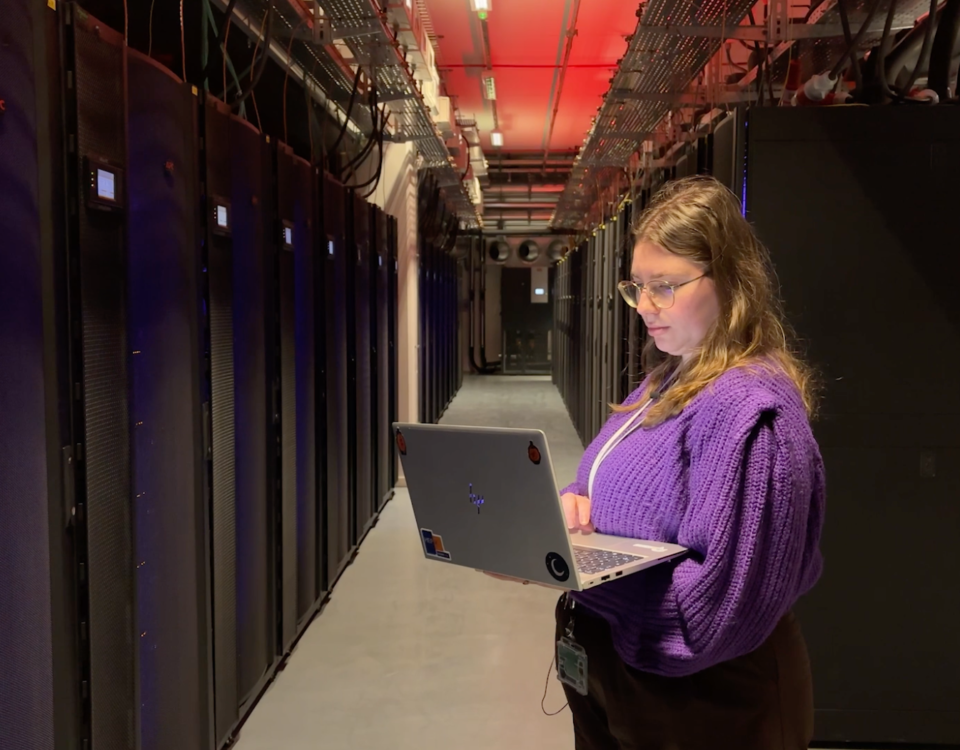
The CC-IN2P3 experienced a high attendance on Saturday, September 16, 2023, during its first participation in the European Heritage Days. Nearly 900 people walked through the aisles of the center to discover its computer rooms, its museum and other activities specifically developed for the occasion. An encouraging first participation especially when we know the investment of the Computing Center in terms of conservation and enhancement of its computer heritage for several years.
Since 2011, the CC-IN2P3 has indeed embarked on this path with the creation of a computer museum, one of the few initiatives of this type in France. Visited by several hundred people per year, only during guided and private tours, this space has become over time a central element of the center’s mediation policy. This one aims to remind the growing role of computer science in physics experiments and to explain the basic concepts of digital technology to an audience often more interested in its applications than in its functioning. It also aims to show the diversity of IT professions at the CNRS in a very competitive job market.
Through a permanent exhibition, this museum presents the evolution of computer equipment and techniques dedicated to science and how the needs of physicists have propelled the development of new technologies, today widely spread. The most well-known is certainly the web, born at CERN to meet the need for sharing information of physicists scattered all over the planet. Among the key pieces of the museum’s collection, we find the NeXTcube computer on which the CC-IN2P3 installed the first French website in 1992!
These heritage days were also an opportunity to discover an exhibition on the subject and to discuss with Daniel Charnay who, alongside our colleague Wojciech Wojcik, participated in the birth of the web in France.
The CC-IN2P3 is currently developing partnerships with other entities to ensure that French computer heritage, and that of the CNRS in particular, does not fall into oblivion. For example, the public discovered CHADAC, a microcomputer straight out of the Laboratoire de physique nucléaire et des hautes énergies (CNRS, Sorbonne Université and Université Paris Cité), in 1982, during the golden age of microcomputing. Recovered to be preserved and showcased, it joined the collection of the CC-IN2P3 computer museum last July. Pierre-Eric Mounier-Kuhn, historian of the CNRS, and Damien Boureille, member of the association ACONIT, were also present during this day to bring a historical perspective on the evolution of techniques through an exciting two-part conference.
The success of this first participation in the European Heritage Days has in any case demonstrated the public’s enthusiasm for computer heritage and its history. A enthusiasm that seems to go in the direction of initiatives such as that of MINF “For a Computer Museum in France” aiming, perhaps one day, to create a large computer museum in France.